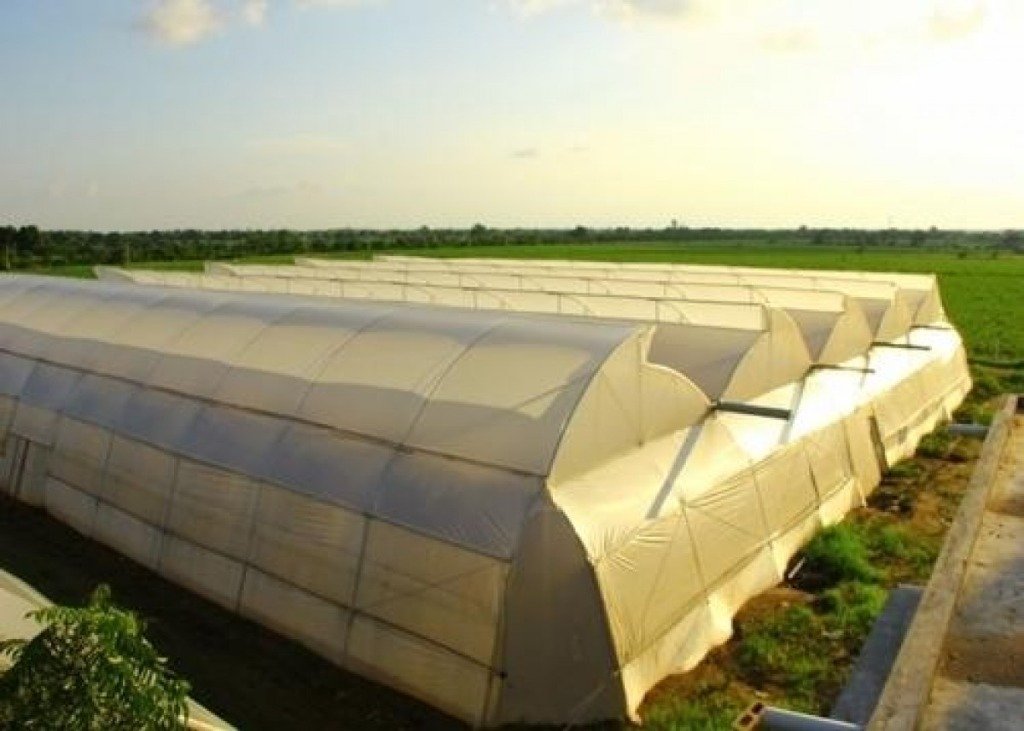
For anyone exploring polyhouse farming in India, the first question is often the most straightforward: What does it cost to set up a polyhouse on one acre? There is no single answer. The cost of a polyhouse project depends on far more than the structure itself. Crop selection, level of environmental control, irrigation and fertigation systems, growing media, planting material, utilities, labour and post harvest requirements all contribute to the overall investment.
More importantly, a polyhouse should not be viewed as an isolated infrastructure investment. It is a complete cultivation system, and its economics need to be evaluated from land preparation and crop establishment through production, harvesting and market linkage.
What Goes Into the Cost of a Polyhouse?
A typical one acre polyhouse project can involve the protected structure, irrigation and fertigation infrastructure, ventilation and climate management systems, water and electrical arrangements, growing media, planting material and farm equipment. The project also requires working capital for cultivation, labour, crop maintenance, harvesting, packing and other operational requirements.
The crop itself can significantly influence the investment. A project designed for premium flowers such as Dutch Rose or Gerbera may have different infrastructure and operating requirements from one developed for high value vegetables. Production cycles, crop management, labour intensity and post harvest handling also affect the economics. This is why a generic “cost per acre” figure can provide only an initial reference. The actual requirement has to be determined according to the proposed project.
What Do Government Cost Norms Mean?
Government supported schemes provide cost norms for different protected cultivation categories. Under the 2025 MIDH/NHB project mode norms, for example, the admissible cost ceiling is ₹75 lakh per acre for Carnation and Gerbera and ₹55 lakh per acre for high value vegetables under polyhouse.
These figures should not be interpreted as standard market prices or as the guaranteed cost of constructing a polyhouse. They represent scheme related admissible cost ceilings, while actual project investment can vary based on specifications, location, infrastructure, technology and crop requirements. Understanding this distinction is particularly important when evaluating a project for financing or subsidy.
How Does Subsidy Affect the Investment?
Eligible protected cultivation projects may receive government assistance under applicable schemes. However, subsidy should not simply be calculated as a fixed percentage of the total project cost. Eligibility, approved components, project structure, documentation, location and prevailing scheme guidelines can all influence the assistance available. Since government provisions can be revised, the applicable guidelines should be verified before making a financial commitment.
The Crop Determines More Than the Revenue
One of the most important decisions in a polyhouse project is what to cultivate. Crop selection affects infrastructure requirements, planting material, labour, cultivation practices, production cycles, post harvest handling and market opportunities. A crop with attractive market prices may not necessarily be the right choice if its production requirements or market access do not suit the project.
The right crop, therefore, is one that fits the land, climate, infrastructure, investment plan and intended market.
From Cost Estimate to Viable Project
The most reliable way to determine the investment required for a one acre polyhouse is through a site specific feasibility assessment and Detailed Project Report (DPR). A well prepared DPR brings together land suitability, crop planning, infrastructure, capital expenditure, operating costs, financing requirements, applicable subsidy provisions and the route to market. It transforms a broad cost estimate into a clearer picture of what the project actually requires.
End-to-End Execution with Vriddhi Agro
At Vriddhi Agro, protected cultivation is approached as an end to end agricultural project. From site assessment and DPR preparation to financing and subsidy facilitation, infrastructure development, crop establishment, farm operations, harvesting, packing, transportation and sales management, every stage is considered as part of the larger project.
Because the real question is not simply “What does a polyhouse cost per acre?” It is “What does it take to make this acre a productive, professionally managed agricultural asset?” That is where the right planning begins.