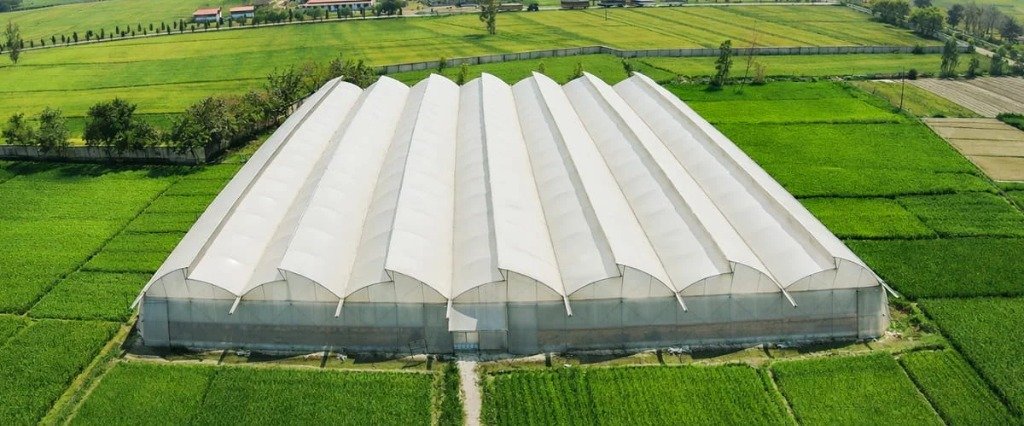
Polyhouse farming in India has emerged as an important model of protected cultivation, particularly for high value flowers and vegetables. Unlike conventional open field farming, a polyhouse creates a more controlled growing environment, allowing key factors such as temperature, humidity, irrigation and nutrient application to be managed with greater precision.
However, a successful polyhouse project involves far more than constructing a protected structure. Site suitability, crop selection, infrastructure planning, cultivation practices, farm management and market linkage must work together to make the project commercially viable.
How Does Polyhouse Farming Work?
A polyhouse typically combines a protected structure with systems such as drip irrigation, fertigation, ventilation and other climate management components. These systems help create suitable growing conditions while enabling more efficient management of water and nutrients. Depending on the crop and project design, protected cultivation can also provide extended growing windows and greater consistency in production.
Which Crops Can Be Grown in a Polyhouse?
Crop selection is one of the most important decisions in a protected cultivation project. Premium flowers such as Dutch Rose, Gerbera and Gypsophila, along with selected high value and exotic vegetables, are among the crops suited to polyhouse cultivation. The final selection should be based on the location, climate, infrastructure, cultivation cycle, investment requirements and market opportunity.
What Is the Cost of Polyhouse Farming in India?
There is no standard polyhouse farming cost per acre. Investment varies according to the structure, irrigation and fertigation systems, crop, technology, growing media, labor and project specifications. Current MIDH/NHB guidelines provide different admissible cost ceilings for protected cultivation projects; these are scheme norms and should not be treated as fixed market prices. Government assistance may also be available for eligible projects, subject to prevailing guidelines and approvals.
Is Polyhouse Farming Profitable?
Polyhouse farming profitability is determined by the complete project economics, not production alone. Crop selection, yield, input costs, labor, crop quality, market prices, post harvest handling and sales channels all influence returns. Professional farm management and a clear route to market are therefore critical to the long term performance of a protected cultivation project.
The Vriddhi Agro Approach
At Vriddhi Agro, protected cultivation is approached as an end to end agricultural project from land assessment and project planning to infrastructure, cultivation, farm operations, harvesting, packing, transportation and market management.
The objective is not simply to grow under a polyhouse, but to build a well planned, professionally managed and commercially aligned agricultural venture.